

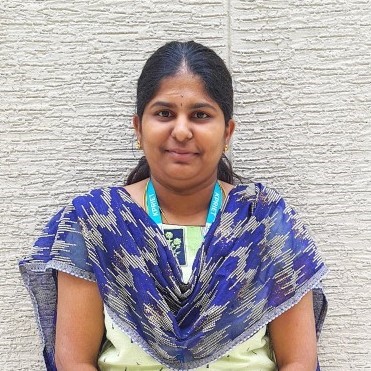
Mr. NANDA KRISHNA P
Associate Tech Lead / AM
The Department of Computer Science and Engineering (Artificial Intelligence and Machine Learning) at KPR Institute of Engineering and Technology is committed to delivering excellence in education and research, equipping students with core knowledge in Computer Science and cutting-edge knowledge in Artificial Intelligence and Machine Learning.
The Department of Computer Science and Engineering (Artificial Intelligence and Machine Learning) at KPR Institute of Engineering and Technology is committed to delivering excellence in education and research, equipping students with core knowledge in Computer Science and cutting-edge knowledge in Artificial Intelligence and Machine Learning.
Established to meet the growing demand for skilled professionals in emerging technologies, the department offers a robust curriculum blending core computing fundamentals like Programming, Data Structures and Algorithms, Computer Architecture, Database Management Systems, Computer Networks, Web Development, Mobile App Development and advanced AIML concepts like Artificial Intelligence, Machine Learning, Deep Learning, Natural Language Processing, Computer Vision, and Generative AI.
With a strong emphasis on experiential learning, students engage in hands-on projects, industry collaborations, and state-of-the-art lab work to enhance problem-solving skills and innovation. Our experienced faculty foster a research-oriented environment, enabling students to explore in various domains.
To establish as a technology hub of education, research and solution in artificial intelligence and machine learning.
PEO 1: Devise cutting edge solutions to the emerging technological problem.
PEO 2: Practice lifelong learning by upskilling in advanced research in artificial intelligence and machine learning technologies.
PEO 3: Function in their profession as socially responsible individuals adhering to the rich cultural and moral ethics.
PO 1. Engineering knowledge: Apply knowledge of mathematics, natural science, computing, engineering fundamentals and an engineering specialization as specified in WK1 to WK4 respectively to develop to the solution of complex engineering problems.
PO 2. Problem analysis: Identify, formulate, review research literature and analyze complex engineering problems reaching substantiated conclusions with consideration for sustainable development. (WK1 to WK4)
PO 3. Design/Development of Solutions: Design creative solutions for complex engineering problems and design/develop systems/components/processes to meet identified needs with consideration for the public health and safety, whole-life cost, net zero carbon, culture, society and environment as required. (WK5)
PO 4. Conduct Investigations of Complex Problems: Conduct investigations of complex engineering problems using research-based knowledge including design of experiments, modelling, analysis & interpretation of data to provide valid conclusions. (WK8)
PO 5. Engineering tool usage: Create, select and apply appropriate techniques, resources and modern engineering & IT tools, including prediction and modelling recognizing their limitations to solve complex engineering problems. (WK2 and WK6)
PO 6. The engineer and the world: Analyze and evaluate societal and environmental aspects while solving complex engineering problems for its impact on sustainability with reference to economy, health, safety, legal framework, culture and environment. (WK1, WK5, and WK7).
PO 7. Ethics: Apply ethical principles and commit to professional ethics, human values, diversity and inclusion; adhere to national & international laws. (WK9)
PO 8. Individual and collaborative team work: Function effectively as an individual, and as a member or leader in diverse/multi-disciplinary teams.
PO 9. Communication: Communicate effectively and inclusively within the engineering community and society at large, such as being able to comprehend and write effective reports and design documentation, make effective presentations considering cultural, language, and learning differences
PO 10. Project management and finance: Apply knowledge and understanding of engineering management principles and economic decision-making and apply these to one’s own work, as a member and leader in a team, and to manage projects and in multidisciplinary environments
PO 11. Life-Long learning: Recognize the need for, and have the preparation and ability for i) independent and life-long learning ii) adaptability to new and emerging technologies and iii) critical thinking in the broadest context of technological change. (WK8)
PSO 1: Design and develop an intelligent automated system applying fundamental knowledge from mathematical, analytical programming and operational skills to solve the arising problems in the field of technology.
PSO 2: Efficiently apply machine learning techniques to fit various business situations.
Duration: 4 years (Regular) / 3 Years (Lateral Entry)
No. of Semesters: 8 (Regular) / 6 (Lateral Entry)
Intake / No. of Seats: 60


Assistant Professor I
Associate Tech Lead / AM

Lab Technician / AM

Junior Assistant / AM
The Department of Computer Science and Engineering (Artificial Intelligence and Machine Learning) at KPRIET prepares students for a thriving career in the rapidly evolving technology landscape. With a curriculum designed to meet the needs of the AI-driven world, students are equipped with cutting-edge skills, making them highly sought-after in diverse industries.
Graduates from the Intelligent Systems Lab are proficient in designing and deploying AI solutions, making them industry-ready professionals and innovative researchers.
When it comes to high-performance in the field of Machine Learning and Big Data analysis, the iMac High-end Machines have emerged as a clear leaders in recent years. iMac has long been a popular platform for Data Scientist.
Data scientists combine technology and social science both together to detect trends and manage data using Macs powered by all-new M1 CPUs and the Pattern Recognition computed framework available in macOS Big Sur and Monterey.
Any workload can be easily handled by a super-fast processor and graphics, enormous memory, and all-flash storage.

Artificial Intelligence Laboratory
Powered by Apple Inc.
Machine Learning Laboratory
Powered by Apple Inc.
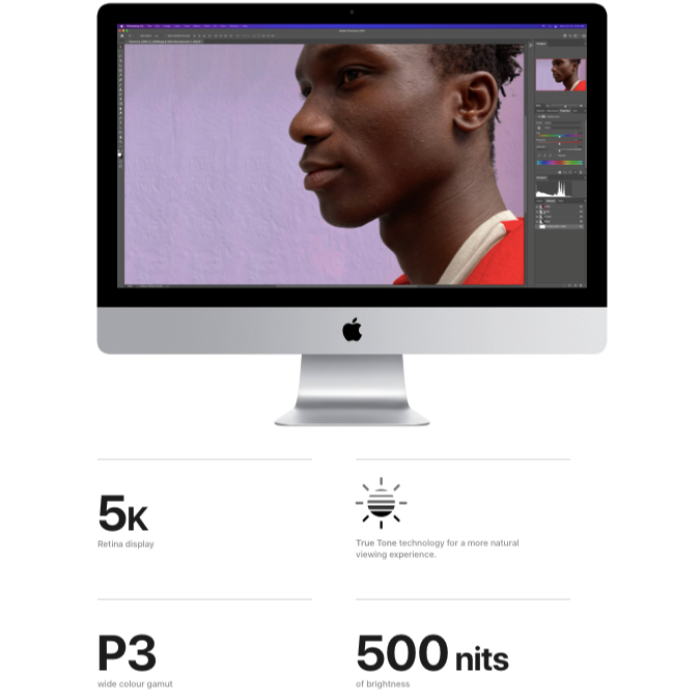
| 1 | Display | 68.58 cm / 27-inch (diagonal) 5K Retina display |
|---|---|---|
| 2 | Processor | Configurable to 3.8GHz 10-core 10th-generation Intel Core i9, Turbo Boost up to 5.0GHz |
| 3 | Memory | Configurable to 16GB, 32GB, 64GB or 128GB |
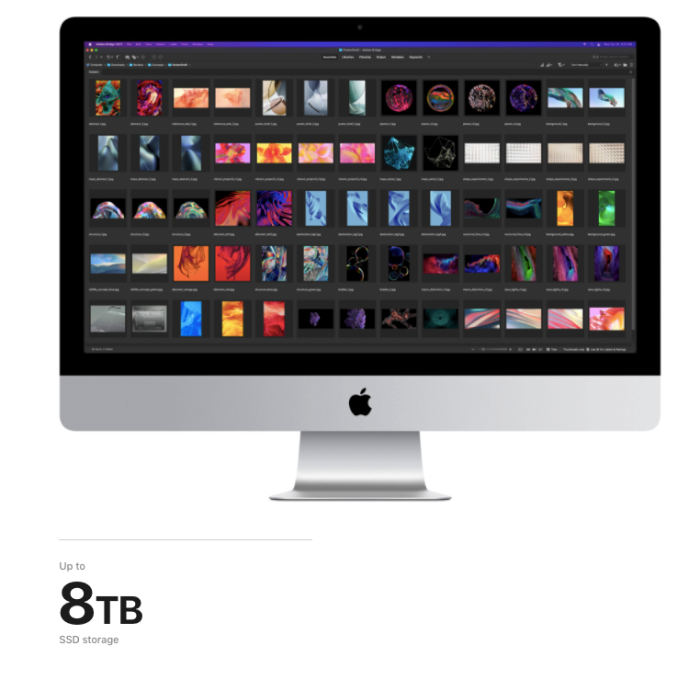
| 4 | Storage | Configurable to 1TB, 2TB, 4TB or 8TB SSD |
| 5 | Graphics | Configurable to AMD Radeon Pro 5700 XT with 16GB of GDDR6 memory |
| 6 | Video Support and Camera | 1080p FaceTime HD camera |
| 7 | Input | Magic Keyboard and Magic mouse |
| 8 | Operating System | macOS Monterey |





SPOC: PANDIYA RAJAN G / Assistant Professor - lll & HoD i/c

SPOC: PANDIYA RAJAN G / Assistant Professor - lll & HoD i/c





























KPRIET – An AI Integrated Campus
Preparing future-ready engineers with AI-integrated teaching and learning. KPRIET integrates Artificial Intelligence across teaching, learning, research and innovation to create a smarter, future-ready campus experience for students and faculty.