Chemical Engineering is one of the highest growing and high paid career choices of engineering graduates.
The Department was started in the year 2018 with a sanctioned intake of 60 student. The department has experienced substantial growth and attained noteworthy milestones since its inception. Our commitment to academic excellence is reflected in increase in the student enrolment over the years. Currently serving over 262 students in the undergraduate program, who are actively engaged in a rigorous and comprehensive curriculum designed to meet the demands of the dynamic field of chemical engineering.
At the heart of our success is a team of dedicated and accomplished faculty members and indispensable non-teaching staff who contribute significantly to the overall function of the functionality. The department is proud of its faculty team, comprised of individuals with Ph.D. and Master's degrees in various fields of Chemical Engineering, each bringing a wealth of experience and expertise to the classroom. They are committed to providing students with theoretical knowledge with practical insights, ensuring that our graduates are well-equipped to excel in their chosen careers. Their contributions to publications in journals, research articles and conference presentations highlights the focus of the department on advancing knowledge and contributing to the broader academic and scientific community.
One of the hallmarks of our department is the recognition as a research centre by Anna University, a testament to our dedication to advancing knowledge and contributing to cutting-edge research in the field. This recognition opens up exciting opportunities for both faculty and students to engage in meaningful research that addresses real-world challenges.
As we continue to evolve and grow, we invite you to explore the Department of Chemical Engineering at KPR Institute of Engineering and Technology. Whether you are a prospective student, a current student, a faculty member, or an industry partner, we look forward to engaging with you in our journey of academic excellence and innovation.
Join us as and together we shape the future landscape of chemical engineering!

I'm honoured to lead the Department of Chemical Engineering at KPR Institute of Engineering and Technology (KPRIET). Our educational approach seamlessly integrates theoretical knowledge with hands-on experience across various domains, including Process Engineering, Materials Science, Environmental Engineering, and Biochemical engineering. As the landscape of chemical engineering undergoes transformative changes, our department adapts and expands continuously.
In this age of swift advancement, possessing practical expertise in the latest developments is indispensable. Our commitment goes beyond imparting fundamental principles; we immerse students in the dynamic developments of the field. We empower them with the knowledge and skills necessary in the ever-evolving landscape of chemical engineering.
To be a centre of academic and research excellence in Chemical Engineering to cater to the diverse needs of industry, society and the global community
PEO 1: Apply knowledge of science, and engineering to solve complex Chemical Engineering problems in diverse chemical and allied industries
PEO 2: Design, develop, and optimize chemical processes and products to uphold the needs of society and environment ensuring sustainability
PEO 3: Exhibit a commitment to lifelong learning, research and professional ethics
PO 1. Engineering knowledge: Apply knowledge of mathematics, natural science, computing, engineering fundamentals and an engineering specialization as specified in WK1 to WK4 respectively to develop to the solution of complex engineering problems.
PO 2. Problem analysis: Identify, formulate, review research literature and analyze complex engineering problems reaching substantiated conclusions with consideration for sustainable development. (WK1 to WK4)
PO 3. Design/Development of Solutions: Design creative solutions for complex engineering problems and design/develop systems/components/processes to meet identified needs with consideration for the public health and safety, whole-life cost, net zero carbon, culture, society and environment as required. (WK5)
PO 4. Conduct Investigations of Complex Problems: Conduct investigations of complex engineering problems using research-based knowledge including design of experiments, modelling, analysis & interpretation of data to provide valid conclusions. (WK8)
PO 5. Engineering tool usage: Create, select and apply appropriate techniques, resources and modern engineering & IT tools, including prediction and modelling recognizing their limitations to solve complex engineering problems. (WK2 and WK6)
PO 6. The engineer and the world: Analyze and evaluate societal and environmental aspects while solving complex engineering problems for its impact on sustainability with reference to economy, health, safety, legal framework, culture and environment. (WK1, WK5, and WK7).
PO 7. Ethics: Apply ethical principles and commit to professional ethics, human values, diversity and inclusion; adhere to national & international laws. (WK9)
PO 8. Individual and collaborative team work: Function effectively as an individual, and as a member or leader in diverse/multi-disciplinary teams.
PO 9. Communication: Communicate effectively and inclusively within the engineering community and society at large, such as being able to comprehend and write effective reports and design documentation, make effective presentations considering cultural, language, and learning differences
PO 10. Project management and finance: Apply knowledge and understanding of engineering management principles and economic decision-making and apply these to one’s own work, as a member and leader in a team, and to manage projects and in multidisciplinary environments
PO 11. Life-Long learning: Recognize the need for, and have the preparation and ability for i) independent and life-long learning ii) adaptability to new and emerging technologies and iii) critical thinking in the broadest context of technological change. (WK8)

PSO 1: Acquire the necessary knowledge, skill and competence on the principles of Chemical Engineering.
PSO 2: Adopt Chemical Engineering principles with advanced and innovative practices for process and product development.
Duration: 4 years (Regular) / 3 Years (Lateral Entry)

No. of Semesters: 8 (Regular) / 6 (Lateral Entry)
Intake / No. of Seats: 60

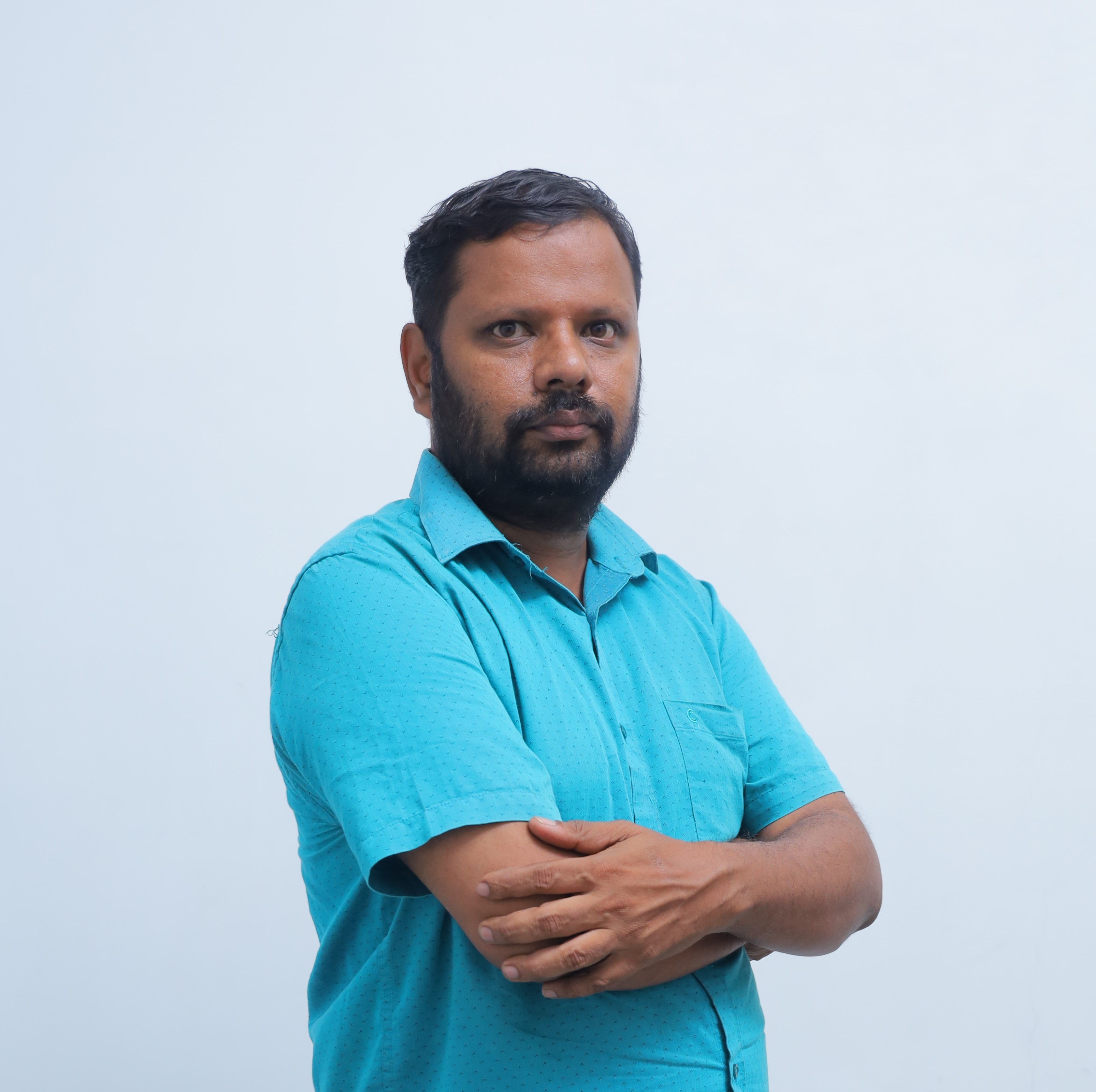
Mr. Ravi Ramasamy has more than 40 years of industrial experience in in fertilizer, petrochemical, refining industry Operations, grass root petrochemical plants and refinery units commissioning and initial startup, HSSE & Process Safety Management, and Training & Development. Consulting to refining, petrochemical and heavy chemicals industry in the areas of safety and operational risk management, process safety, behavior safety, fire safety and total quality management. Mr.Ravi Ramasamy was a Senior Vice President, in Reliance Industries Ltd. Mr. Ravi Ramasamy is currently working as Director of Pragna Consultations Pvt Ltd., and Director of Chem-skills Development Center for providing Industry-oriented knowledge, skill and training for students of Chemical Engineering.
Senior Lab Technician / CH
Lab Technician / CH
Junior Assistant / CH
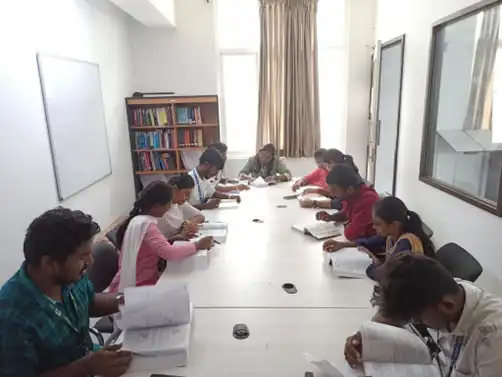
The Chemical Engineering department library is a treasure trove of knowledge, encompassing a vast array of essential resources in the field. It houses an extensive collection of books, spanning topics like fluid mechanics, heat transfer, mass transfer, chemical reaction engineering, thermodynamics, process dynamics and control, GATE preparation books and even delves into fundamental subjects such as organic chemistry. This diverse collection equips students with in-depth understanding and insights crucial for their academic and professional pursuits. Moreover, the library subscribes to prominent monthly magazines like "The Chemical Engineer" and "Chemical Engineering Progress," ensuring that readers are constantly updated with the latest industry news, research breakthroughs, and case studies. With dedicated study spaces and a wealth of book resources, it stands as a hub of intellectual exploration and academic support, fostering an environment where curiosity thrives and knowledge flourishes.
Who can study B.E in Chemical Engineering at KPR Institute of Engineering and Technology
The candidates must have passed the 12th standard (intermediate) or its equivalent examination from the Government recognized board with the subjects as Physics, Chemistry and Mathematics with the percentage as 45% (for general candidates), 40% (for backward class including Muslim), 40% (MBC & DNC) and 40% (for SC/ST/SCA) candidates.
As the candidates from other states are considered under General Category, a Pass with minimum average marks in Physics, Chemistry and Mathematics put together as 45% (General Category)
The candidate should have passed in all the subjects and scored a minimum average of 45% in Physics, Chemistry and Mathematics put together as in General Category
The candidate should have passed in all the subjects and scored a minimum average of 45% in Physics, Chemistry and Mathematics put together
Passed Diploma examination with at least 45% marks (40% marks in case of candidates belonging to reserved category) in any branch of Engineering and Technology
Download the strategy document to understand what are the opportunities available for a student at KPRIET
KPRIET – An AI Integrated Campus
Preparing future-ready engineers with AI-integrated teaching and learning. KPRIET integrates Artificial Intelligence across teaching, learning, research and innovation to create a smarter, future-ready campus experience for students and faculty.